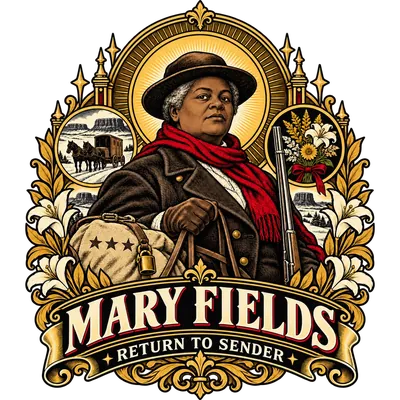
Remember her for this
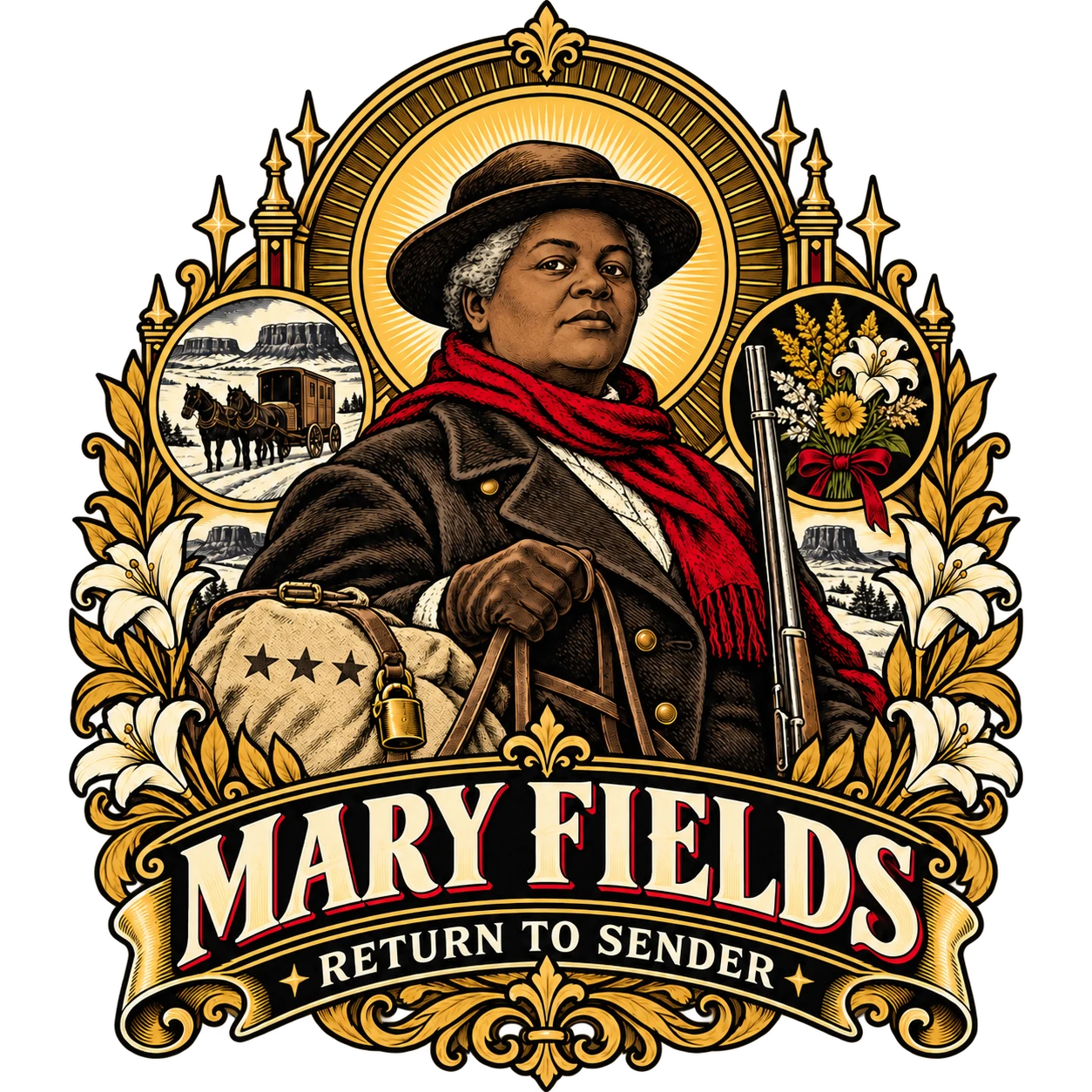
Around 1894 a bishop ordered Mary Fields off St Peter’s Mission, where she had worked for nearly ten years without wages. She moved down the road to Cascade. In 1895 she was back on that road, in her sixties, carrying the mission’s mail, and she kept on carrying it for eight years.
Her story
Mary Fields was born into slavery, worked nearly ten years without wages at a Montana mission until its bishop threw her out, then carried the US mail back up the same road for eight years, from her sixties into her seventies.
The road to St Peter’s Mission runs west out of Cascade, Montana, towards the mountains. For eight years Mary Fields carried the United States mail along it, through Montana winters. She was in her sixties when she started.
She was born into slavery around 1832, most likely in Tennessee. Like the lives of most enslaved people, hers was barely written down. Her birthday is unknown, and who held her, and where, has never been settled. She was past thirty when slavery ended.
Once free, she worked on the Mississippi steamboats, and years later she still liked to tell how the crew of the Robert E. Lee fed hams and sides of bacon into the furnaces during the great race against the Natchez in 1870.
Later she worked in the household of Judge Edmund Dunne. When his wife died, she brought the Dunne children north to Toledo, Ohio, to the judge’s sister, Mother Mary Amadeus, superior of the Ursuline convent there.
She stayed on to run the nuns’ laundry, kitchen, garden and grounds, and the convent remembered her temper. “God help anyone who walked on the lawn after Mary had cut it,” Sister Grace recalled in 1981.
In 1884 Mother Amadeus led a handful of Ursulines west to St Peter’s Mission to open a boarding school for Native American girls. Within months she was gravely ill with pneumonia. When the news reached Toledo, Mary Fields followed. She arrived in 1885, in her early fifties, and stayed about ten years.
She hauled the freight in from Cascade in all weathers, kept the hens, grew the vegetables, hunted game and mended what broke. She lived on the mission but refused to take wages, which left her free to come and go as she pleased.
She smoked, swore and drank with the men, wore men’s shirts and jackets over her skirts, carried a gun and fought with the hired hands. Complaints reached the bishop, Jean-Baptiste Brondel. Around 1894 he ordered the nuns to send her away. They argued for her, and then they obeyed.
As the story was told in 1959, she set off for Helena to “make him bring witnesses to swear what they have said against me”. The bishop did not change his mind.
She moved down the road to Cascade and opened a restaurant. It failed, because she fed people who could not pay. So did her second.
In 1895, with help from the Ursulines, she began carrying the mail between Cascade and St Peter’s, the mission that had just sent her away. No African American woman is known to have carried the United States mail before her. She drove a mail wagon behind her team, and kept the route until 1903.
Afterwards she stayed in Cascade, taking in laundry and minding many of the town’s children. She grew flowers, and made buttonhole bouquets for the Cascade baseball team, with bigger ones for anyone who hit a home run.
She was Cascade’s only Black resident. The town grew fond of her and still called her “Black Mary”, and worse. The historian Dee Garceau-Hagen argues that its people “affirmed a caste system based on race, even as they celebrated Fields’ notoriety”.
Mary Fields died in Great Falls on 5 December 1914, aged about eighty-two. The news ran on the front pages of both local newspapers. She is buried in Cascade, beside the road she drove.
Then the stories took over, and by 1950 the magazines had found her. In 1959 the film star Gary Cooper, who had seen her in Cascade as a boy, told Ebony what the town remembered. She could whip any two men in the territory, and wore a .38 under her apron. She celebrated two birthdays a year, and the schools closed for each. The mayor gave her special permission to drink in the saloons. Cooper called her “one of the freest souls ever to draw a breath or a .38”.
In 2019 an asteroid was named after her: 7091 Maryfields, about five kilometres across, circling the Sun between Mars and Jupiter.
She spent her last thirty years in Montana choosing her own work, clothes, company and fights. When the church put her out, she came back up the same road, carrying everybody’s letters.
The trouble with Mary Fields
Mary Fields refused the place laid out for a Black woman born into slavery. She hauled freight, carried a gun, drank in saloons and wore men’s coats. When a bishop put her off the mission she had worked for nearly ten years without wages, she drove its mail up the same road for the next eight, in her sixties. She was the only Black resident of a town that loved her stories and still called her names.
What the usual story gets wrong
-
“She drove a stagecoach, which is how she got her name.”
Verdict: Oversimplified
The Postal Service’s historian describes her driving a mail wagon on the route from Cascade to St Peter’s Mission, and stories also have her meeting the trains at Cascade to drive visitors out to the mission. In Cascade she was “Black Mary”. “Stagecoach Mary” is the headline of the 1959 Ebony article that carried her fame far beyond Montana.
-
“She was the second woman ever to carry the US mail.”
Verdict: False
Women had carried the mail for half a century before her. The Postal Service’s historian names a woman appointed to carry it in 1845, another who drove a contract mail wagon in Massachusetts from about 1860, and at least eighteen women on contract routes in the 1890s alone. “The second female ever to drive a U.S. mail route” is how the 1959 Ebony article put it. Her real first is that she is the earliest African American woman known to have carried the United States mail.
-
“She fought off bandits to keep the mail safe.”
Verdict: Little evidence
The bandits arrive in her story without names, dates or places. The dangers told in detail come from her years hauling freight for the mission, before she carried mail: a night spent guarding a spilled load after wolves frightened her team, and a night in a blizzard walking back and forth to keep from freezing. Both are in the 1959 Ebony telling.
-
“In eight years on the route she never missed a day.”
Verdict: Little evidence
The eight years, 1895 to 1903, are on the Postal Service’s record. The perfect attendance belongs to the stories: “each day, never missing a one”, in the 1959 Ebony telling, repeated in 2019 in the citation for the asteroid named after her.
-
“The bishop threw her out after she shot a man.”
Verdict: Disputed
There was trouble with a hired man, and around 1894 the bishop ordered her off the mission, but the accounts cannot agree on what happened. The 1959 Ebony article calls it a gun duel and says “no one remembers how it turned out”; a Smithsonian account has both drawing guns and neither firing; one reference book has the man slightly wounded. The Montana Historical Society puts the bishop’s anger down to the life she led: smoking, swearing and quarrelling with the other hired hands.
Sources & rabbit holes
Mary Fields left no written account of her own. The nearest thing to a first-hand record is the Ursulines’ 1923 life of Mother Amadeus, compiled from the convent annals. The sisters’ Montana archives are now at The History Museum in Great Falls. The Postal Service’s historian dates her mail route to 1895–1903, and both local newspapers put her death on their front pages in December 1914. Her legend was in print by 1950 and took its lasting shape in 1959, in Gary Cooper’s recollections in Ebony. The historian Dee Garceau-Hagen’s essay “Finding Mary Fields” traces how Montana built that legend, and what it says about race.
Primary sources
-
Stagecoach Mary (opens in a new tab)
Free to read. The article that made her famous, reprinted with photographs of her, her house and her grave. It is the source of the two birthdays a year, the saloon permission and the eight years without a missed day.
-
Life of the Rev. Mother Amadeus of the Heart of Jesus (opens in a new tab)
Free to read. The Ursulines’ life of the nun Mary Fields followed west, compiled from the convent annals. Page 95 introduces her as “a mighty helper” who “remembered slavery”, and tells how she brought Judge Dunne’s children to Toledo.
Museums & archives
-
Women Mail Carriers (opens in a new tab)
The Postal Service’s own history of the women who carried the mail, from 1845 on. It dates her route to 1895–1903 and names her the earliest African American woman known to have carried mail.
-
The Life and Legend of Mary Fields (opens in a new tab)
The state historical society’s short account, with a photograph from the Ursuline archives, a reading list, and the flowers, children and baseball team that the legend leaves out.
-
Mary Fields (opens in a new tab)
A short biography that is good on her years at the mission and on what refusing wages gave her, though it repeats the bandits, the wolves and the unbroken attendance as fact; read it alongside “What the usual story gets wrong”, above.
Academic papers
-
Finding Mary Fields: Race, Gender, and the Construction of Memory (opens in a new tab)
The essential scholarly essay on how Montana turned her into a legend of superlatives, and what those superlatives say about race. Subscription access.
-
African-American Women on the Western Frontier (opens in a new tab)
A short survey of Black women in the West, with Mary Fields among them. Free to read online with a JSTOR account.
Books
-
Black Cowboys in the American West: On the Range, on the Stage, behind the Badge (opens in a new tab)
Includes “Mary Fields’s Road to Freedom” by Miantae Metcalf McConnell, who spent a decade tracing her through the records.
Watch
-
Women of Northwest Ohio Spotlight: Mary Fields (opens in a new tab)
Ninety seconds from Toledo public television on her years with the Ursulines in Ohio, before Montana.
Listen
-
Black Women in the West (opens in a new tab)
The musician and historian of Black cowboy music on the song “Black Woman”, and on the lives of Biddy Mason and Mary Fields.
Further reading
-
How Mary Fields Became “Stagecoach Mary” (opens in a new tab)
A short, free article built on the scholarship, with links to the research behind it.
-
7091 Maryfields (opens in a new tab)
The asteroid named after her: about five kilometres across, in the main belt between Mars and Jupiter. Its naming citation is under “Discovery Circumstances”.